Home » Public Policy » Our Work » Congressional Events
Congressional Events
Congressional Lunch Briefings
AIMBE regularly partners with the Congressional Research and Development Caucus to host an annual series of Congressional Lunch briefings for Members of Congress and their staff highlighting the latest, innovative medical and biological engineering advancing health care. The purpose of the briefing series is to demonstrate breakthroughs only possible with federal funding for R&D and to advocate for increased support.
FoNIBIB Hosts a Congressional Briefing on New Approach Methodologies (NAMs)
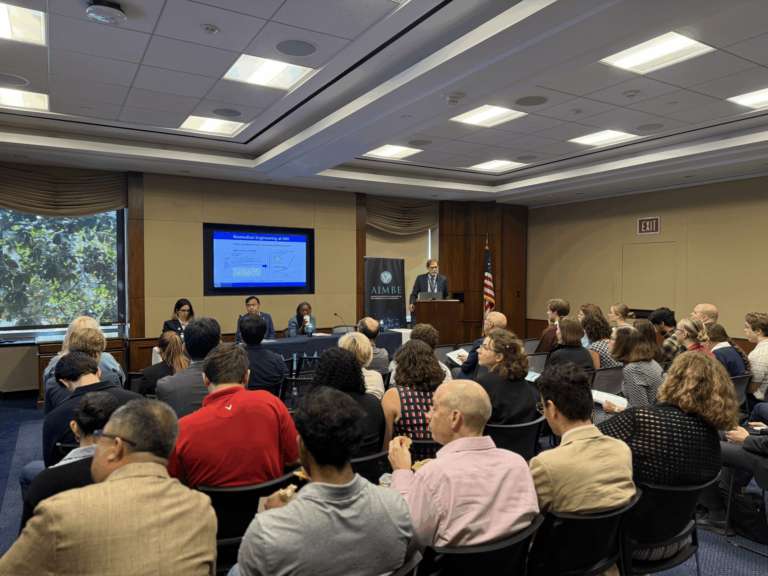
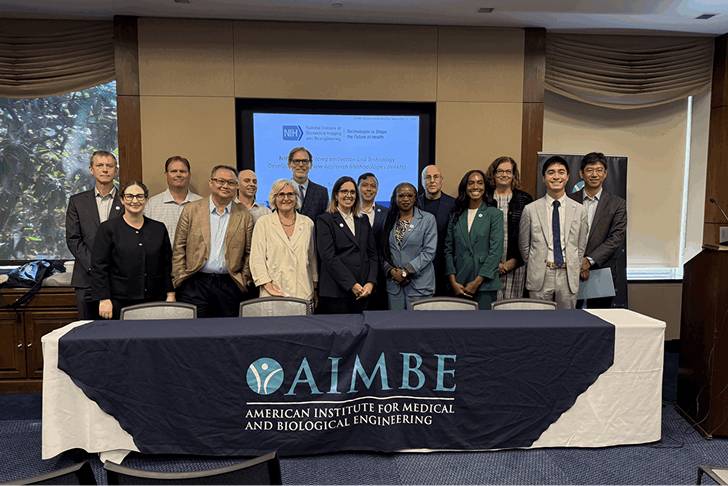
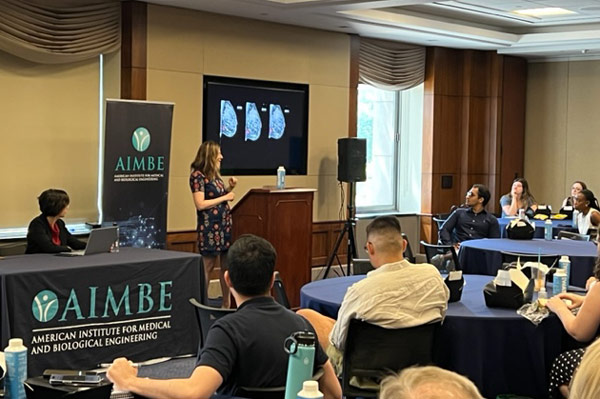
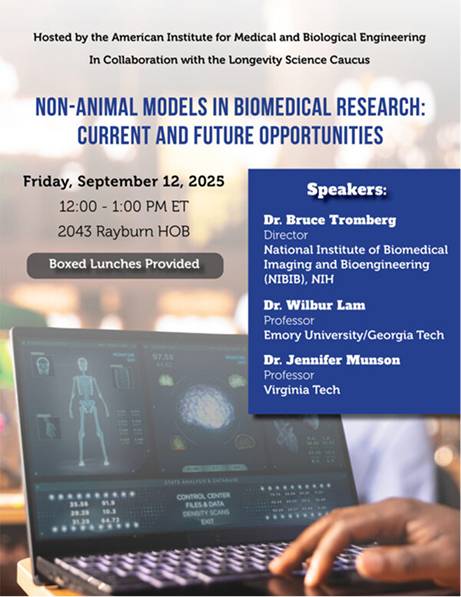
On September 12, 2025, FoNIBIB organized a Congressional Lunch Briefing on “Non-Animal Models in Biomedical Research: Current & Future Opportunities” in collaboration with the House Longevity Science Caucus. Over forty attendees, including legislative aides to Members of Congress and government relations staff from various science stakeholder groups, attended the event. Dr. Lola Eniola-Adefeso (AIMBE President) provided opening remarks followed by a presentation by Dr. Bruce Tromberg (NIBIB Director), on the Institute’s strategic investments to support New Approach Methodologies (NAMs), opportunities for their growth, and key considerations for validating and commercializing these technologies. Drs. Wilbur Lam (Emory University and The Georgia Institute of Technology) and Jenny Munson (Fralin Biomedical Research Institute and Virginia Tech) spoke on biological and computational technological approaches to NAMs. We emphasized the crucial role of the medical and biological engineering community in leading these efforts to enable their full potential as complementary approaches and potential replacements to traditional animal models.
Click here to view our educational one-pager on NAMs.
AIMBE Leads Stakeholder Briefings on PFAS in Medical Devices
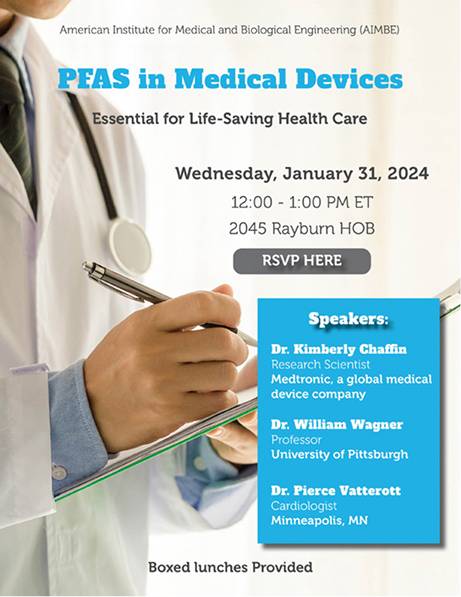
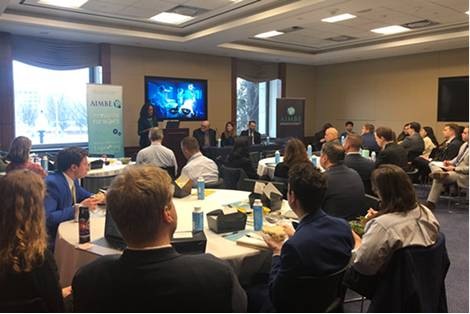
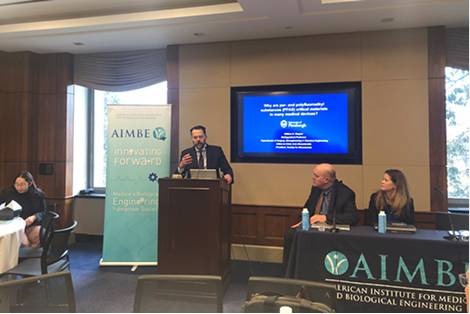
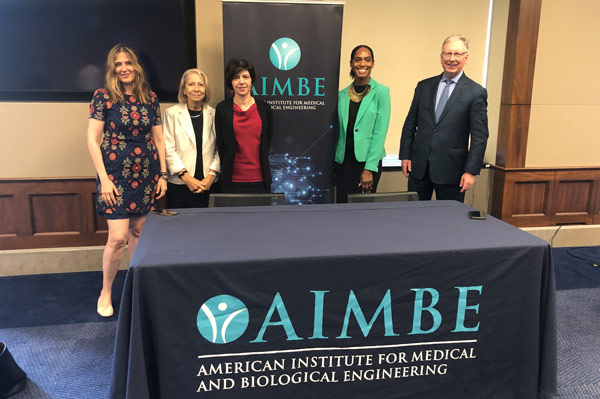
AIMBE’s Industry Council is leading the charge to highlight the importance of Per- and Polyfluorinated Substances (PFAS) to the medical device industry. These so-called “forever chemicals” are rightfully being scrutinized to protect our health and environment; however, a very small number of these chemicals play critical roles in making sure that our medical devices save tens of millions of patients’ lives. AIMBE hosted a roundtable meeting to gather stakeholders to discuss the use of PFAS in medical devices and how they may be impacted by supply and pending regulatory changes. Perspectives including suppliers/processors of PFAS, medical device companies (users of PFAS), federal agencies (e.g., FDA, NIH, NIST, EPA, etc.), academia, public health, policy, and more were represented. A congressional lunch briefing, hosted by AIMBE, was held on the same topic to educate lawmakers and staffers about the importance of fluorinated polymers to live-saving medical devices. The briefing featured AIMBE Fellows Dr. Kim Chaffin, Medtronic and Dr. William Wagner, University of Pittsburgh.
At the state level, AIMBE Fellows, Dr. Nadine Ding (Abbott) and Dr. Bill Wagner (University of Pittsburgh), presented to the Maine State Chamber of Commerce on the importance of PFAS in medical devices in the context of Maine’s PFAS in Products Law which mandated that manufacturers of products containing intentionally added PFAS disclose their presence to the Department of Environmental Protection (DEP) by January 1, 2023 (later extended to 2025). It also prohibited the sale of such products if they failed to report and set a ban on all products containing intentionally added PFAS starting in 2030, with few exceptions. Drs. Ding and Wagner discussed the impact this law would have on medical devices and patients. Following their impactful comments, on April 16, 2024, Maine Governor Janet Mills approved significant revisions to the PFAS in Products Law. The amendments eliminate the reporting obligation unless the DEP determines that the use of PFAS in the product is deemed “currently unavoidable.” They also remove the deadline for such notification and establish exemptions from the law for specific products containing intentionally added PFAS. Importantly, medical devices were included on the list of exemptions. Click here for more information.
On a national level, new articles published in the Heart Rhythm Journal called for clear distinctions between harmful PFAS compounds and essential fluoropolymers used in life-saving medical devices. AIMBE Fellows Nadine Ding, PhD, Paul Drumheller, PhD, Joyce Wong, PhD, and AIMBE Executive Director, Dawn Beraud, PhD, co-authored two of the featured articles, warning of the consequences to patient care if access to fluoropolymer-containing devices is compromised. Public and legislative efforts increasingly seek to regulate PFAS, often treating them as a single group. However, these articles emphasize that not all PFAS are the same. Fluoropolymers, a specific subclass of PFAS, are non-toxic, non-bioavailable, and critically important to modern medicine, particularly in cardiac electrophysiology. Through these publications, these experts reached a key clinical audience and reinforced the importance of education as a tool for effective advocacy.
AIMBE Highlights Heath AI for Congress
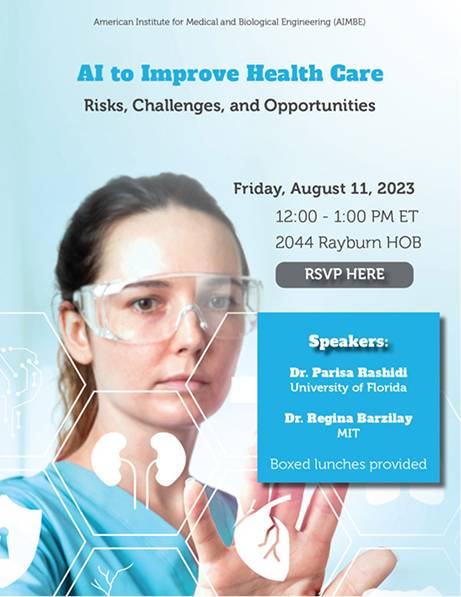
AIMBE hosted a Congressional Lunch Briefing for legislative staffers on AI to Improve Health Care focusing on the risks, opportunities, and challenges of Medical AI. Speakers included AIMBE Fellows, Dr. Regina Barzilay (MIT), and Dr. Parisa Rashidi (University of Florida). As Congress begins to consider further legislation and policy proposals to regulate AI, AIMBE is honored to be at the table providing the medical and biological engineering perspective to lawmakers. Drs. Barzilay and Rashidi were also able to participate in individual meetings with their Senate and Member offices to dive deeper into the issues raised during the briefing.
Following the AIMBE congressional briefing on Health AI, AIMBE submitted written testimony to the Senate Finance Committee in response to their hearing on “Artificial Intelligence and Health Care: Promise and Pitfalls.” Click here to watch a recording of the hearing. Click here to read AIMBE’s testimony.
Congressional Lab Tours
AIMBE Hosts Congressional Staff Tour of NIH
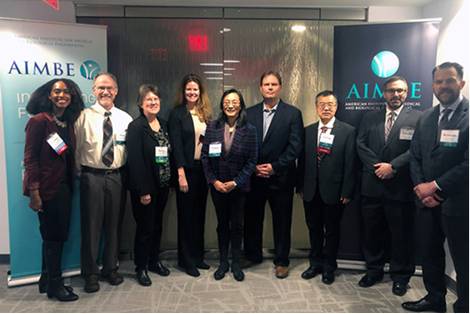
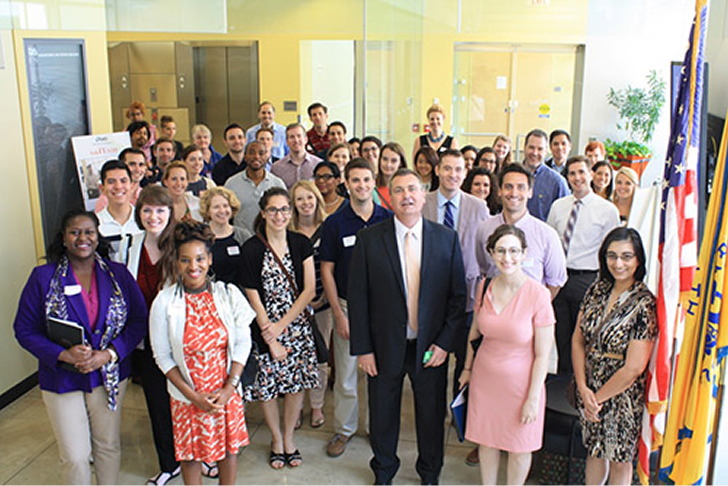
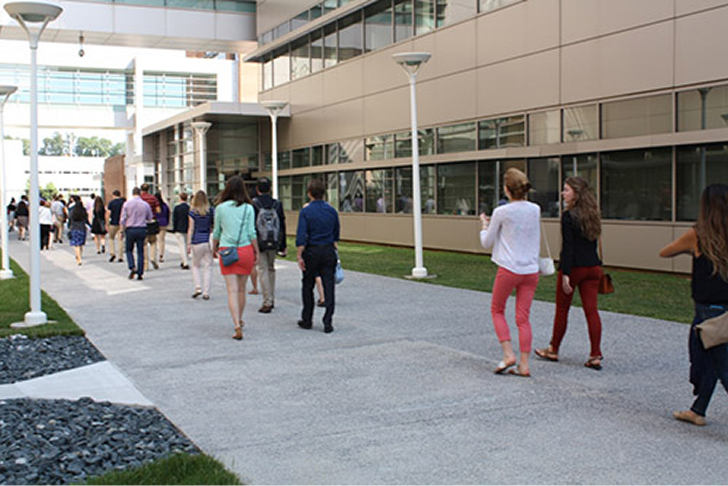
AIMBE recently hosted its fifth tour of the National Institutes of Health (NIH), providing Congressional staff with a look inside the National Institute of Biomedical Imaging and Bioengineering (NIBIB). Nearly 50 legislative aids to Members of Congress witnessed cutting-edge bioengineering technologies first-hand–the largest Congressional event the NIH has seen to date!
The mission of NIBIB is to improve health by leading the development and accelerating the application of biomedical technologies. The Institute is committed to integrating the physical and engineering sciences with the life sciences to advance basic research and medical care.
By organizing a tour of NIBIB for Congressional staff, AIMBE educates and informs policy makers about the importance of federal funding for biomedical innovation in tackling society’s grand challenges
The mission of NIBIB is to improve health by leading the development and accelerating the application of biomedical technologies. The Institute is committed to integrating the physical and engineering sciences with the life sciences to advance basic research and medical care.
By organizing a tour of NIBIB for Congressional staff, AIMBE educates and informs policy makers about the importance of federal funding for biomedical innovation in tackling society’s grand challenges
AIMBE Hosts Congressional Staff Tour of FDA Labs
AIMBE provided Congressional staff with their first look inside the U.S. Food and Drug Administration (FDA). Nearly 50 legislative aids to Members of Congress toured intramural research labs and met with senior FDA scientists at the Centers for Devices and Radiological Health (CDRH). CDRH Office of Science and Engineering Laboratories (OSEL) Director Edward Margerrison briefed congressional staff about the offices’ mandate to protect and promote the public health by conducting research in order to review cutting-edge medical devices for regulatory approval. CDRH assures that patients and health care providers have timely and continued access to safe, effective, and high-quality medical devices. By organizing a tour of FDA for Congressional staff, AIMBE educates policy makers about the importance of federal funding for medical device research designed to keep Americans safe and healthy. This tour, and AIMBE’s congressional tours of NIH, are part of AIMBE’s expanded advocacy efforts to inform key House and Senate staffers about the role of federal funding for medical device innovation, from the early stages of discovery funded by NIH, to regulatory approval by FDA.
Congressional Science Exhibitions
KidneyX
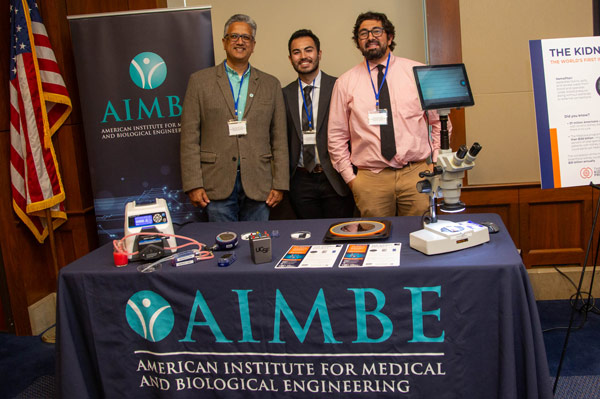
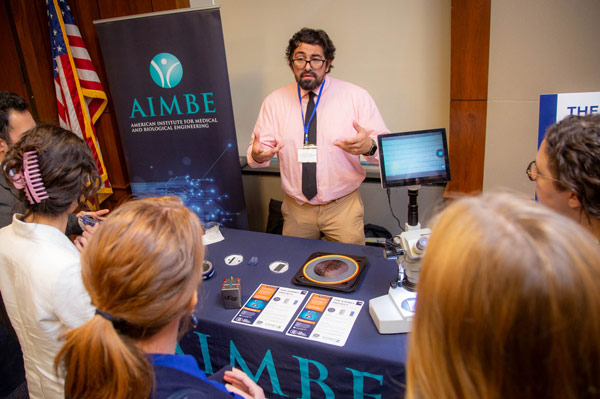
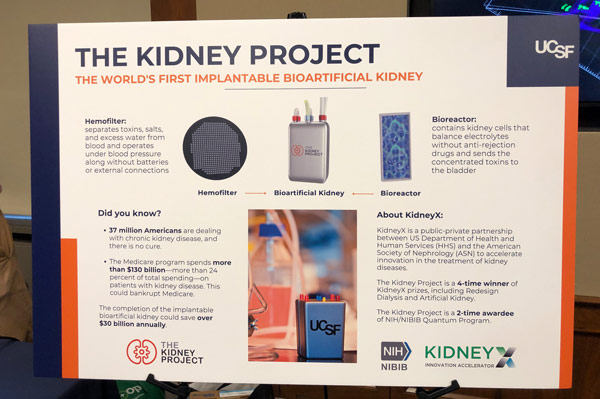
AIMBE participated in a Congressional Science Exhibition sponsored by the Coalition for Life Sciences in the U.S. House of Representatives. AIMBE highlighted the KidneyX program, a public-private partnership between the Dept. of Health and Human Services (HHS) and the American Society of Nephrology (ASN) designed to spur private sector innovation in kidney disease treatments.
AIMBE Fellow Dr. Shuvo Roy from the University of California, San Francisco demonstrated his KidneyX-funded work on the artificial kidney. This congressional event allowed Members of Congress and their staff to learn about emerging technologies in the life sciences sector supported by federal funding. Dr. Roy met individually with his delegation and co-chairs of the Congressional Kidney Caucus.
NSF
As an organizational member of the Coalition for National Science Funding (CNSF), an alliance of over 140 professional organizations, universities and businesses, AIMBE supports the goal of increasing the national investment in the National Science Foundation’s research and education programs in response to the unprecedented scientific, technological and economic opportunities facing the United States.
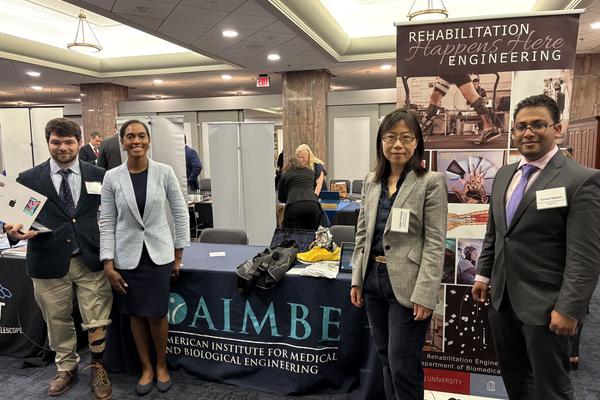
AIMBE routinely participates in a Congressional Exhibition for Members of Congress and their staff demonstrating the importance of NSF-funded research. In May 2025, AIMBE Fellow Dr. Helen (He) Huang and her laboratory members, Dr. Varun Nalam & Brendan Driscoll, from the North Carolina State University & University of North Carolina at Chapel Hill showcased their innovative work on robotic prosthetics and met with their delegation while in Washington, D.C.
BME Research to Congress
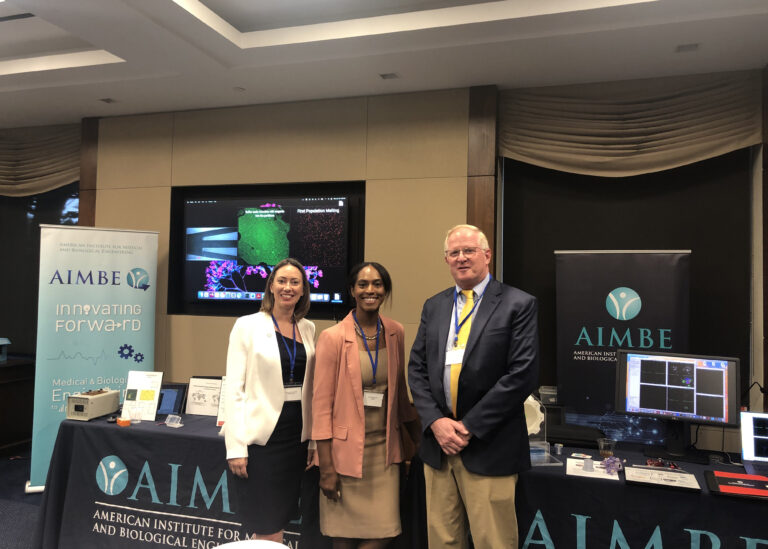
AIMBE participated in a science exhibition sponsored by the Coalition for Life Sciences at the U.S. House of Representatives. The exhibition provided an opportunity for the biomedical research community to engage Members of Congress and their staff about how scientific progress advances public health. AIMBE selected Fellows Dr. Walter Block (University of Wisconsin-Madison) and Dr. Stephanie Fraley (UCSD) to demonstrate their work and participate in congressional visits. AIMBE’s booths featured work on a rapid diagnostic test identifying known and novel bacterial, fungal, and viral pathogens by Dr. Fraley, as well as surgical devices for accelerating magnetic resonance image-guided brain surgery using SBIR funding by Dr. Block.
Capitol Hill Days
AIMBE Storms the Hill to Advocate for Medical and Biological Engineering
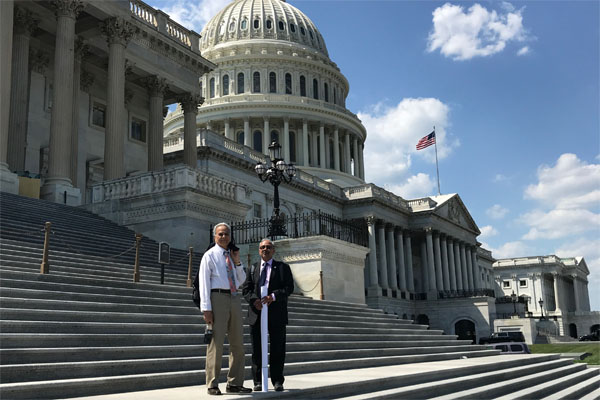
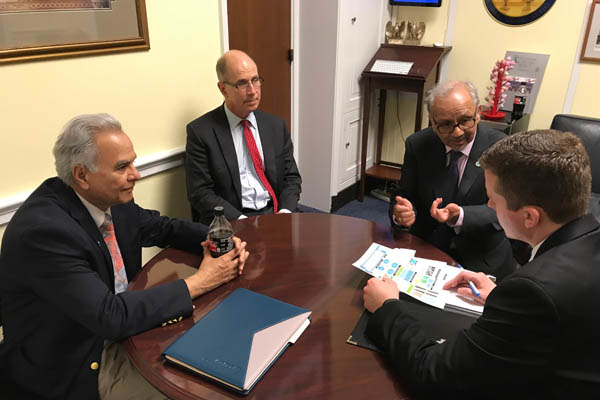
Each year during AIMBE’s Annual Event Fellows across the country travel to Washington, DC to meet with their Representatives and Senators to advocate the positive impact medical and biological engineering has on society. Each Fellow relays their personal experience, whether in the lab, classroom or boardroom of how biomedical engineers are not only creating jobs, but a higher quality of life for all Americans.
Bringing with them medical devices and technologies, Fellows illustrated how federal investment in bioengineering research and development translates ideas from the lab bench to the bedside of patients. Even in these fiscally constrained times, there is a direct need for sustained investment in federal R&D, as slashed funding risks forfeiting America’s leadership in the biotechnology industry to Europe or China. In addition, AIMBE Fellows conveyed the reality that erratic and slashed funding impedes the innovation pipeline, as universities and businesses lose the researchers and the brain power vital to the process of product development. At a time when health care costs continue to soar and manufacturing is shipped overseas, biomedical engineers are the entrepreneurs and innovators who are developing the products that lower health costs and are produced right here in the United States.
By visiting one-on-one, AIMBE Fellows make a powerful statement to our policy makers in Washington how medical and biological engineers are fostering healthy lives, a health economy and a healthy world.